Elvy's Preaching and Vigil
Handling the UndeadElvy's Preaching and Vigil is the neighborhood mission Elvy undertakes after seeing the Virgin Mary: she and Hagar visit residents to urge spiritual preparation for the return of Jesus Christ, then gather those who come seeking company into a vigil. The episode turns Elvy’s private religious certainty into public action, while showing the limits of persuasion: she can warn and invite, but cannot make belief happen for anyone else.
From vision to mission
Elvy’s preaching grows out of a vision that she treats as a commission, not as an amusing or casual experience. When she earlier explains the dead’s return, she attributes it to the spirits and the souls of the dead being let loose. The later vision of the Virgin Mary gives this upheaval a religious and maternal gravity: Mary’s grief over her dead son makes Elvy understand the tribulation as suffering on a world-shaking scale. Elvy does not share Hagar’s levity about the apparition. To her, the matter is serious, and the task that follows carries an obligation.
Before they set out, Elvy makes clear that the work is not to become a spectacle. Hagar imagines taking their prophecies elsewhere, but Elvy insists that participation requires seriousness rather than excitement. That distinction shapes the mission: the point is not to perform as prophets, but to tell people what Elvy believes the crisis means and leave them free to respond. Her conviction is intense, yet she knows that a vision does not automatically persuade anyone else.
Door-to-door preaching
Elvy and Hagar begin with the Soderlunds, neighbors Elvy knows about but has never been close to. The approaching storm darkens the sky; birds fall silent, people remain indoors, and the charged air heightens Elvy’s expectation that the decisive night may be near. She has not prepared a speech, trusting that words will come when needed. When the husband answers, Elvy tells him that they have come to prepare him for the return of Jesus Christ, then links that warning to the dead having arisen.
The encounter also establishes the form and limits of her appeal. Elvy says they are making no demands and cannot force anyone to do anything. She warns instead that turning away from God, now that they have what she considers evidence, may be a terrible mistake. The couple does not accept the warning: the husband angrily leaves, and the visit ends without conversion. Elvy’s message is offered as a choice, not an order, even when she believes the stakes are absolute.
Across two hours, the pair visit twelve houses and speak with perhaps twenty people. Some residents shut the door as soon as they learn the subject; more listen than Elvy and Hagar expected. Elvy compares the difference with her experience of Jehovah’s Witnesses, whom she had courteously dismissed and watched move quickly from one home to the next. She does not mistake a more receptive hearing for proof that her preaching has succeeded. Her own vision and sense of duty have not made her naïve about how difficult it is to persuade others, even in biblical stories.
The household becomes a place of refuge
The storm’s arrival gives the mission a consequence Elvy could not produce by speech alone. After the power fails, a neighbor returns to say that her husband has behaved strangely, drunk heavily, and gone out; if this truly is the last night, she does not want to be alone. Elvy welcomes her in. The invitation turns the house from a stopping point on the route into a refuge for people frightened by the possibility of an ending.
Others arrive with practical contributions. Greta brings coffee and homemade pastries in a basket beneath her vivid green rain poncho. Another woman brings candles in case the power is still out, and Mattias, a young man with a computer background, explains that he had considered bringing his laptop but sees little use for it while the storm continues. The group’s response is not an abstract agreement with doctrine alone: they come because the storm and the possibility of a transformed world make solitude harder to bear.
When everyone’s attention turns to Elvy, she speaks without claiming that the gathering gives her special power. Alone, she says, they can do nothing; faith lives through sharing. She calls their assembling a blessing and proposes sitting vigil together, hand in hand, so that if the night proves to be the last they will meet it in company. The speech is halting rather than inspired, and the others receive it quietly. Its significance lies less in eloquence than in the act it enables: people who might otherwise face the night separately now remain together.
Vigil, song, and public echo
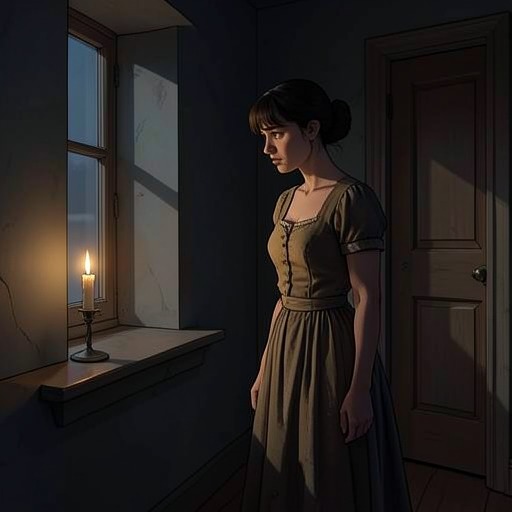
The vigil takes shape through ordinary acts of hospitality and shared ritual. With candles lit, coffee poured, and pastries served, the neighbors explain why they have come. The thunder has subsided enough for Hagar to turn up her hearing aid and take part. When the group searches for a song, Hagar suggests Nearer, My God, to Thee; everyone joins in as best they can, singing loudly enough to drown out the storm while their breath makes the candle flames flicker. The storm does not disappear from the scene, but the gathering answers it with a sound made together.
The episode places this small domestic assembly beside a later, more exposed attempt to speak publicly about the dead. At a crowded podium, two elderly women take the microphone and begin arguing that the dead awakened because their souls had returned, warning that people were spiritually lost. Their address is cut off when the public-address system is switched off and security removes the speaker. The scene does not identify the women as Elvy and Hagar, but it echoes the same effort to interpret the crisis through the soul and to warn others before the chance is gone. Against that interrupted speech, Elvy’s house offers a different scale of religious action: not a platform or a proclamation heard by a crowd, but a room in which people can listen, sing, and keep watch together.